At Envoy we are serious about the safety of our partners and customers. Therefore, along with our friends at Framery we’ve gathered up answers for the most frequently asked questions we and you have received regarding on how to make people feel safe to return to their workplaces and use their pods:
The cleaning guide
Pods can and should be cleaned efficiently on a regular basis. All materials of the pod can be cleaned with disinfection solution.
Pod ventilation
Work pods protect their users from droplets coming from outside of the pod as pods take the air from the top of the pod and then the air inside is pushed down.
Interestingly the air circulation inside a pod is multiple times higher than the general recommendation for habituated spaces. A typical recommendation is 6-8 liters per second (13-17 cubic feet per minute) of ventilation per person inside a space. For example, the ventilation speed of our collection is significant. The Framery O is 21,5 l/s (45 CFM), Framery Q is 66 l/s (140 CFM) and Framery 2Q is 121 l/s (256 CFM). It takes 70-100 seconds for the air to change completely inside a Framery pod.
Clean pods make for happier workplaces.
Pro Tips
Framery Pod Cleaning Tips
Cleaning and disinfection
Cleaning and disinfecting are two different processes:
Cleaning means physically removing germs, dirt and organic matter from surfaces.
Disinfecting means using chemicals to kill germs on surfaces. It’s important to clean before disinfecting because organic matter and dirt can reduce the ability of disinfectants to kill germs.
A combination of cleaning and disinfection will be most effective in removing the COVID-19 virus. Cleaning reduces the soil load on the surface, allowing the disinfectant to work and kill the COVID-19 virus. Disinfectant may not kill the virus if the surface has not been cleaned with a detergent first.
How do I clean?
Use the following steps to clean an environment:
- Wear gloves when cleaning. Gloves should be discarded after each clean. If it is necessary to use reusable gloves, gloves should only be used for COVID-19 related cleaning and should not be used for other purposes or shared between workers. Wash reusable gloves with detergent and water after use and leave to dry. Clean hands immediately after removing gloves using soap and water or hand sanitiser.
- Thoroughly clean surfaces using detergent and water. Always clean from the cleanest surfaces to the dirtiest surfaces. This stops the transfer of germs to cleaner surfaces and allows you to physically remove and dispose of the largest possible amount of germs.
- If you need to use a disinfectant, clean the surface first using detergent then apply a disinfectant or use a combined detergent and disinfectant (see next section). A disinfectant will not kill germs if the surface has not been cleaned first. Apply disinfectant to surfaces using disposable paper towel or a disposable cloth. If non-disposable cloths are used, ensure they are laundered and dried before reusing.
- Allow the disinfectant to remain on the surface for the period of time required to kill the virus (contact time) as specified by the manufacturer. If no time is specified, leave for 10 minutes.
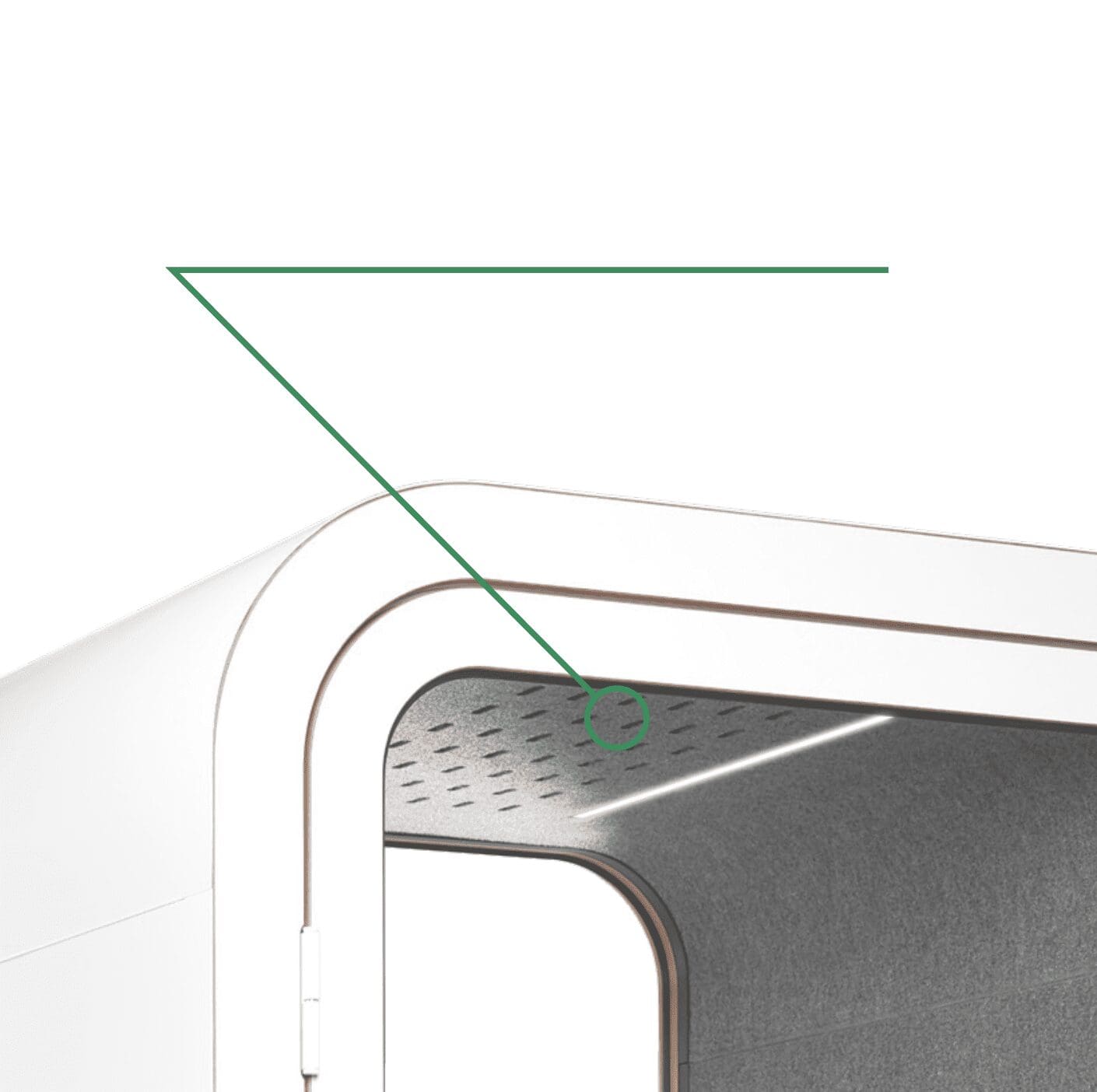
Ventilation Shaft
Vacuum clean the ventilation shaft every 6 months.
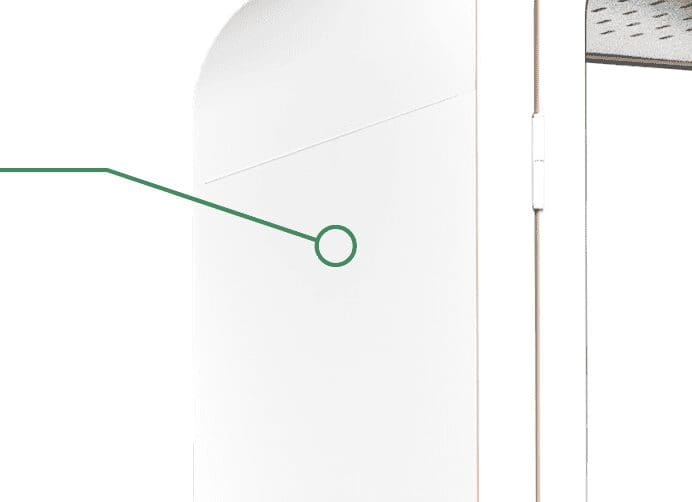
Exterior
Wipe metal body covers every six months using a mildly alkaline all-purpose detergent for cleaning.
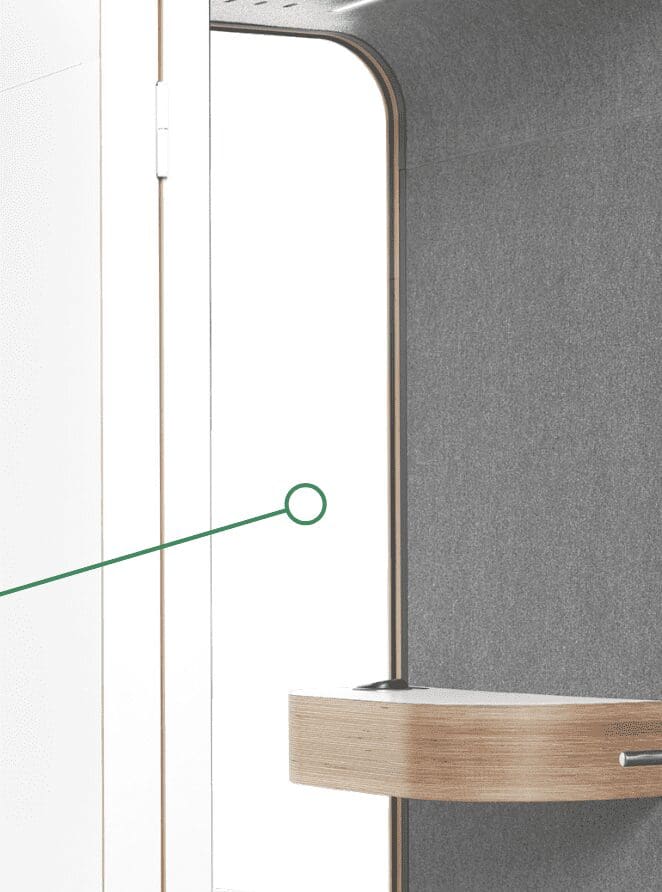
Glasses
Clean the glasses every 2 weeks with a standard glass cleaning solution.
Fabric Stools, Sofa, Felts and Carpet
Vacuum clean the interiors every 2 weeks.
Framery uses wool in their fabrics. Wool is naturally resistant to dirt.
For woollen textiles we recommended dry cleaning or professional cleaning. Alcohol-based disinfectants can be used without damaging the textiles or changing its colour. Concentration should be between 70-85%.
Avoid chlorine-based and bleach cleanable solutions.
Note: In extreme circumstances, a 1% chlorine-based solution may be used for the felt
We do not recommend washing woollen textiles.
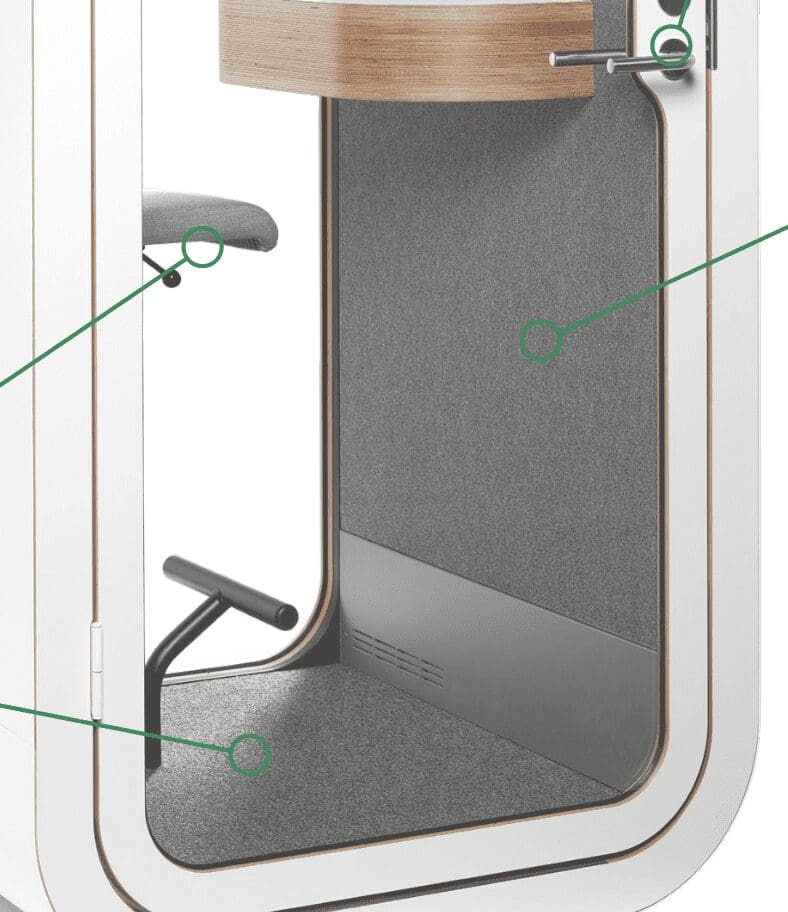
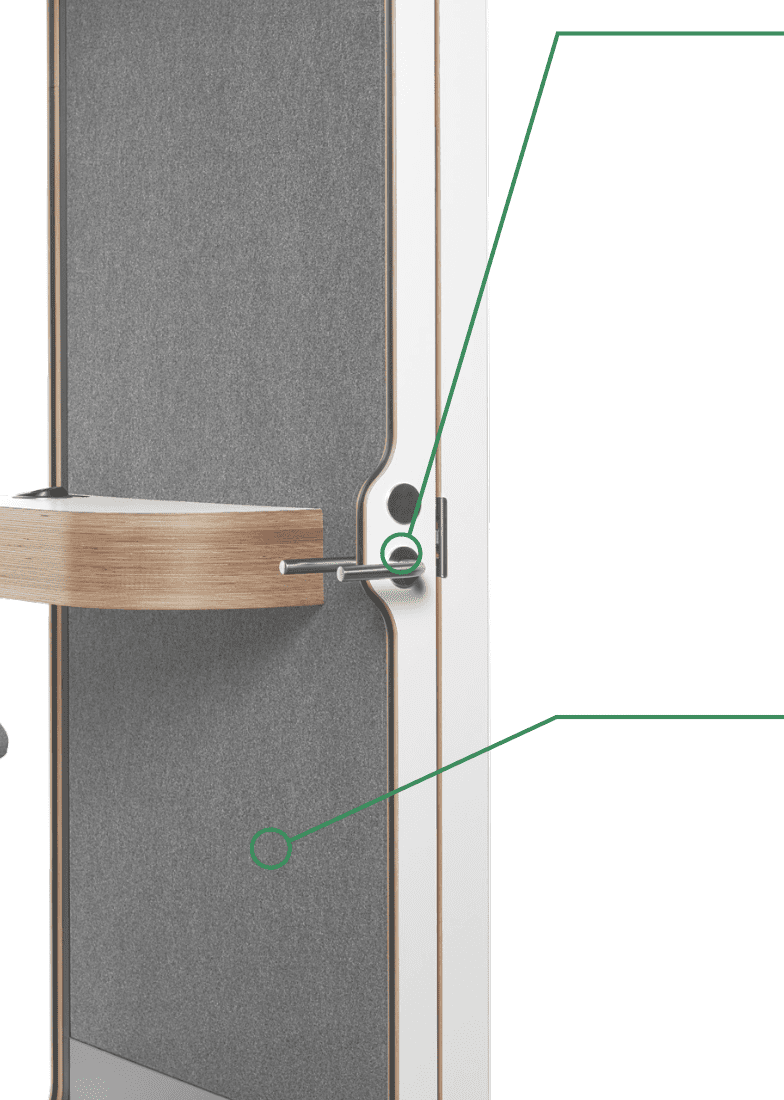
Frames, Table & Door Handle
Every 2 weeks use a mildly alkaline all-purpose detergent for cleaning.
Alcohol-based disinfectants can also be used.
In extreme circumstances, a 1% chlorine-based solution may be used for table tops
Standard glass cleaning solution can be used every 2 weeks.