A practical guide to office acoustics that actually work
Open plan offices are meant to bring people together. Too often they bring everyone’s phone calls, meetings and conversations together too. The result is a space where people reach for headphones, book meeting rooms just to think, or stay home on the days they need to concentrate.
The good news is that a noisy office is rarely a lost cause. Most noise problems come down to a handful of causes, and each one has a practical fix. This guide explains how to reduce noise in an open plan office, tells you what is actually going on in a noisy office, the difference between soundproofing and sound absorption, and the simple framework acousticians use to bring noise under control.
Why office noise matters more than you think
Office noise does not have to be loud to have an effect. In a well-known Cornell University study published in the Journal of Applied Psychology in 2000, researchers placed experienced clerical workers in either a quiet office or one with low-level open office noise, including speech, for three hours. The workers in the noisy office:
- had higher levels of the stress hormone epinephrine
- made 40 per cent fewer attempts to solve a puzzle, a sign of lower motivation
- made only half as many adjustments to their chairs and workstations
Notably, the workers in the noisy office did not report feeling more stressed. In other words, people often underestimate how much background noise is affecting them.

Soundproofing vs sound absorption: what is the difference?
When people search for “soundproofing an office”, they usually mean one of two different things, and the fix depends on which one you need.
| Soundproofing (sound blocking) | Sound absorption | |
|---|---|---|
| What it does | Stops sound travelling from one space to another | Reduces echo and reverberation within a space |
| Solves | Conversations being overheard through walls or doors | A room that feels loud, echoey and tiring |
| Typical solutions | Solid partitions, sealed doors, enclosed pods | Acoustic ceiling elements, wall panels, soft furnishings |
| How it is rated | Sound insulation ratings such as Rw (or STC) | Absorption ratings such as NRC |
Most open plan offices need a bit of both. Acoustic panels will make a space calmer and reduce how far voices carry, but they will not make a conversation confidential. For that, you need an enclosed space.
The ABC approach: absorb, block, cover
Acoustic designers often break office noise control into three steps, known as the ABCs of acoustics. Working through them in order is the most reliable way to fix a noisy floor without overspending.
A is for absorb
Hard surfaces such as concrete ceilings, glass, plasterboard and hard floors reflect sound around the room. Every reflection keeps the noise alive a little longer, so conversations build on each other and the whole floor gets louder. Sound-absorbing materials soak up those reflections.
Where to start:
- The ceiling. In most open plan offices, the ceiling is the largest untreated surface, which makes it the best place to start. Suspended ceiling elements, acoustic baffles and acoustic lighting shades all add absorption without taking up floor space. Baffles hang vertically from the ceiling, so they absorb sound on both faces and work well under exposed concrete or services. Options include HEY-SIGN wool felt ceiling elements, Opus acoustic blades and acoustic shades such as the Petal Acoustic Shade.
- The walls. Wall panels and tiles reduce reflections between parallel walls and around meeting areas. Envoy’s range includes the Sand Acoustic Panel, Harp Wall Blades and acoustic tiles such as the Diffuse Acoustic Tile.
- The floor and furniture. Carpet, rugs and upholstered furniture all add absorption at a low cost.
What to look for: an NRC (Noise Reduction Coefficient) rating. NRC runs from 0 to 1, where 0 means a surface reflects all sound and 1 means it absorbs all of it. The higher the number, the more sound the product absorbs.
Browse the full range of acoustic elements and noise reduction products.
B is for block
Absorption calms a room down, but it will not stop a voice from reaching the next desk. Blocking puts something solid between the source of the noise and the people it is disturbing.
Options, from lightest to most effective:
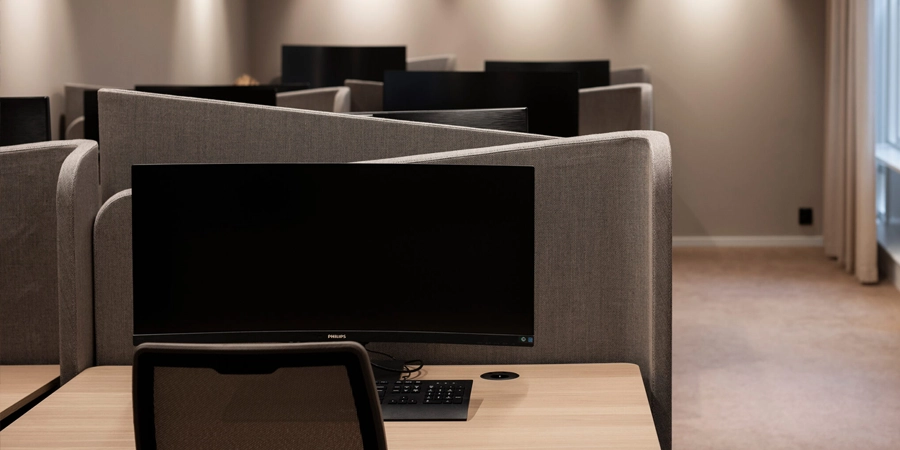
- Desk screens and freestanding dividers reduce direct sound between neighbouring desks and help define zones. The HEY-SIGN Room divider Wave and curved version combine blocking with wool felt absorption.
- Partitions create semi-enclosed zones without a full fitout. See Envoy’s partitioning range.
- Seal the gaps in enclosed rooms. Sound travels wherever air can. In private offices and meeting rooms, gaps under and around doors, unsealed cable and service penetrations, and lightweight hollow-core doors let speech leak straight through. Solid-core doors with perimeter and drop seals make a noticeable difference, and an acoustic assessment will pinpoint the worst leaks.
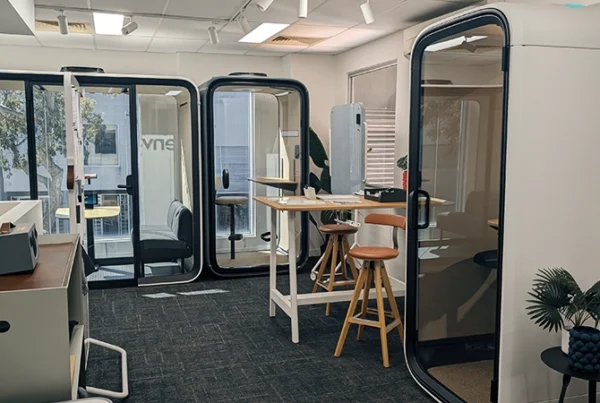
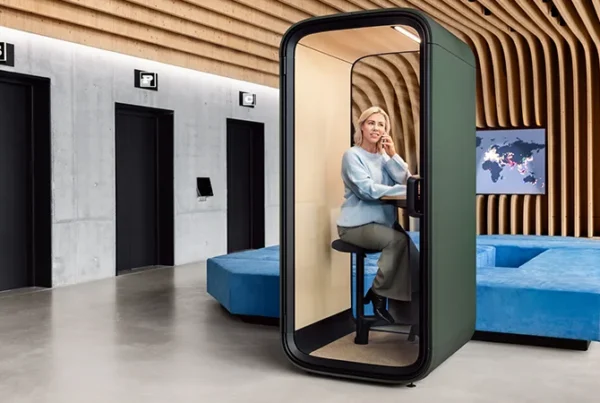
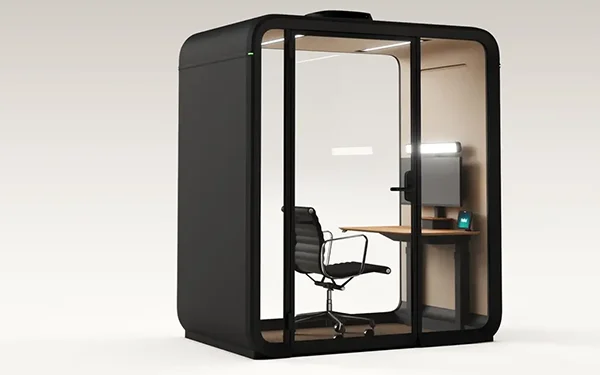
- Office pods and phone booths move the noisiest activities, such as calls and video meetings, into fully enclosed, acoustically tested spaces. This is often the single biggest improvement you can make, because it removes the noise at its source. Our guide to office pods explains the difference between phone booths, focus pods and meeting pods, and how many your team needs.
C is for cover
Once you have absorbed and blocked as much as you can, the remaining step is to cover what is left. Sound masking systems add a low, even background sound, similar to soft airflow, that makes distant speech harder to understand. It sounds counterintuitive to add sound to a noisy office, but speech you cannot quite make out is far less distracting than speech you can.
Some meeting pods include their own masking. The Framery Six, for example, has built-in sound masking to help keep conversations inside the pod.
Zone the floor plan
The best acoustic products in the world will struggle if a sales team on the phone all day sits next to people writing reports. Before you buy anything, look at how your floor plan is laid out.
- Separate loud and quiet work. Group collaborative, phone-heavy teams together and away from teams that need to concentrate.
- Create a quiet zone. A clearly signposted quiet area, ideally with extra absorption overhead, gives people somewhere to go for focused work.
- Put phone booths where calls happen. If people take calls at their desks because the nearest booth is too far away, the booth is in the wrong place.
- Watch the kitchen and breakout areas. These are often the loudest parts of the floor. Treat them with absorption and keep them away from focus areas.
- Agree on simple etiquette. Speakerphone rules, headset use for video calls and a shared understanding of the quiet zone cost nothing and help every other measure work better.
Quick wins checklist
If you need to make an improvement quickly, start here:
- Move calls and video meetings into phone booths or pods.
- Add acoustic treatment to the ceiling above the noisiest areas.
- Add wall panels to large, hard, parallel walls.
- Put rugs and soft furnishings in breakout and kitchen areas.
- Add dividers between teams with very different noise levels.
- Create and signpost a quiet zone.
Measure before you spend
Every office is different, and guessing at acoustic treatment can mean spending money in the wrong place. A short acoustic assessment shows you where the problems actually are.
Envoy’s acoustic testing and assessment service measures background noise, reverberation and speech leakage on site, identifies weak points such as door gaps and glazing, and turns the findings into a prioritised plan of quick wins and targeted treatments. On-site measurement typically takes a few hours.
For projects that need formal compliance reporting, such as new fitouts designed against AS/NZS 2107 (the Australian and New Zealand standard for recommended design sound levels and reverberation times in building interiors), engage a registered acoustic consultant.
Frequently Asked Questions
What is the best way to soundproof an office?
Work through three steps: absorb echo with acoustic ceiling and wall treatments, block sound with dividers, sealed doors and enclosed pods, then cover remaining speech with sound masking if needed. Start by measuring the space so you spend money where the problem actually is.
How can I soundproof my office room?
For a private office or meeting room, most sound leaks through the door and any gaps. Fit a solid-core door with perimeter and drop seals, seal cable and service penetrations, and add acoustic panels inside the room to reduce echo. If the walls stop at a suspended ceiling, sound can also travel over the top, which may need a builder or acoustic consultant to fix.
Can you soundproof an open plan office?
You cannot make an open plan office fully soundproof without walling it in, which defeats the purpose of open plan. What you can do is reduce how loud and echoey the space feels with sound absorption, and give people enclosed spaces such as phone booths and meeting pods for calls and confidential conversations.
What is the difference between soundproofing and sound absorption?
Soundproofing, or sound blocking, stops sound travelling from one space to another. Sound absorption reduces echo and reverberation within a space. Acoustic panels absorb sound, while solid partitions and enclosed pods block it. Most offices need both.
Do acoustic panels work in an office?
Yes, when they are used for the right job. Acoustic panels reduce echo and the build-up of noise across a floor, which makes a space feel calmer and less tiring. They will not make conversations private on their own, so pair them with enclosed spaces for calls and confidential meetings.
Where should acoustic panels go in an office?
Start with the ceiling, which is usually the largest hard surface in an open plan office. Then treat large hard walls, especially parallel walls and areas around meeting spaces, kitchens and breakout zones.
What is sound masking?
Sound masking adds a low, steady background sound to a space so that distant speech is harder to understand. It is usually the final step after absorbing and blocking noise, and works best in offices that are otherwise too quiet, where every conversation stands out.
How do I reduce noise in my office quickly?
Move calls and video meetings out of the open plan and into phone booths or pods, then add acoustic treatment to the ceiling above the noisiest areas. These two steps usually make the biggest difference for the least disruption.







Get expert advice
Every noisy office has a different mix of causes. The Envoy team can assess your space, recommend the right mix of absorption, blocking and pods, and supply and install the solution. Request an acoustic assessment, or book a showroom visit in Melbourne, Sydney or Brisbane to hear the difference for yourself.